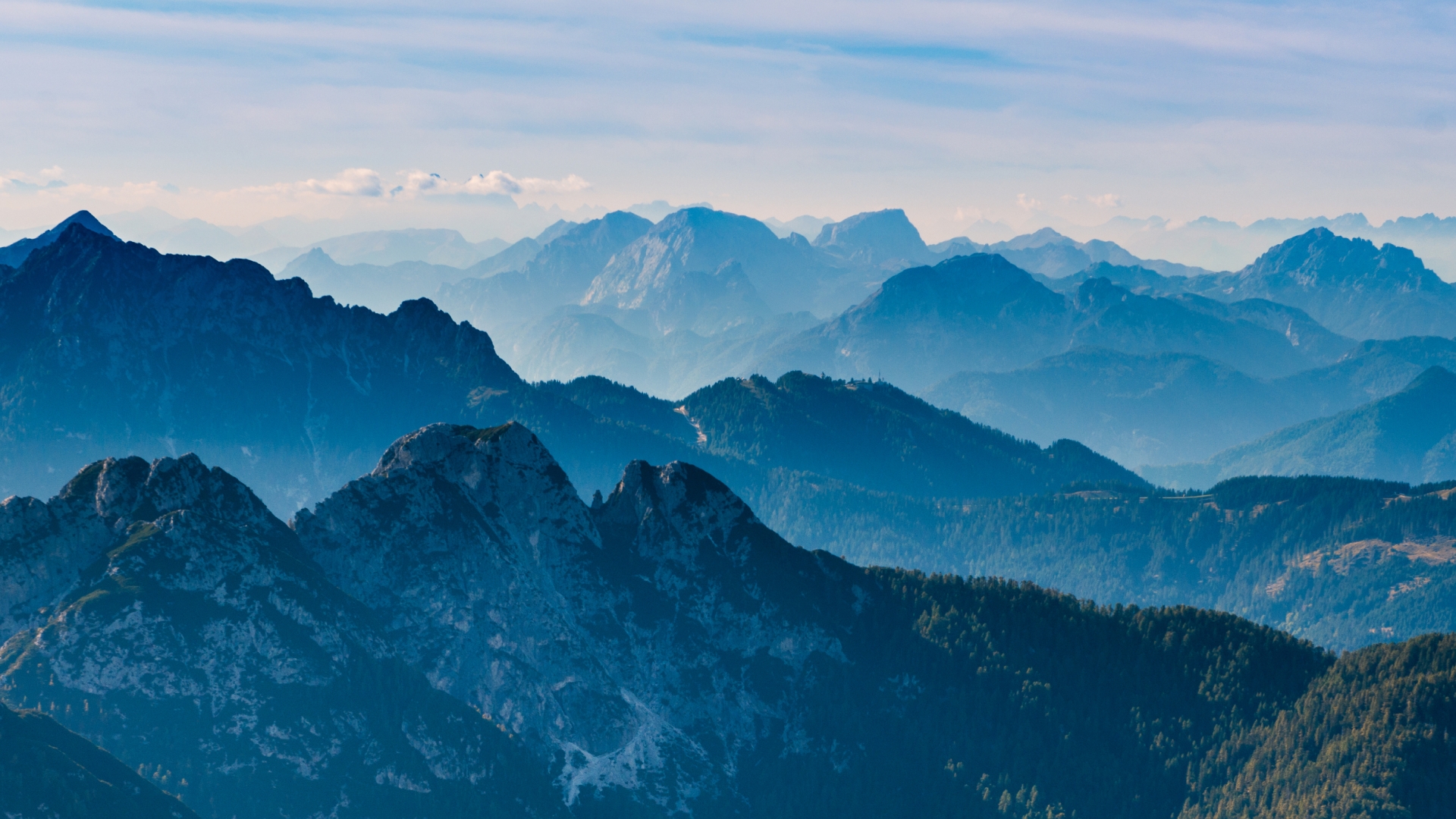
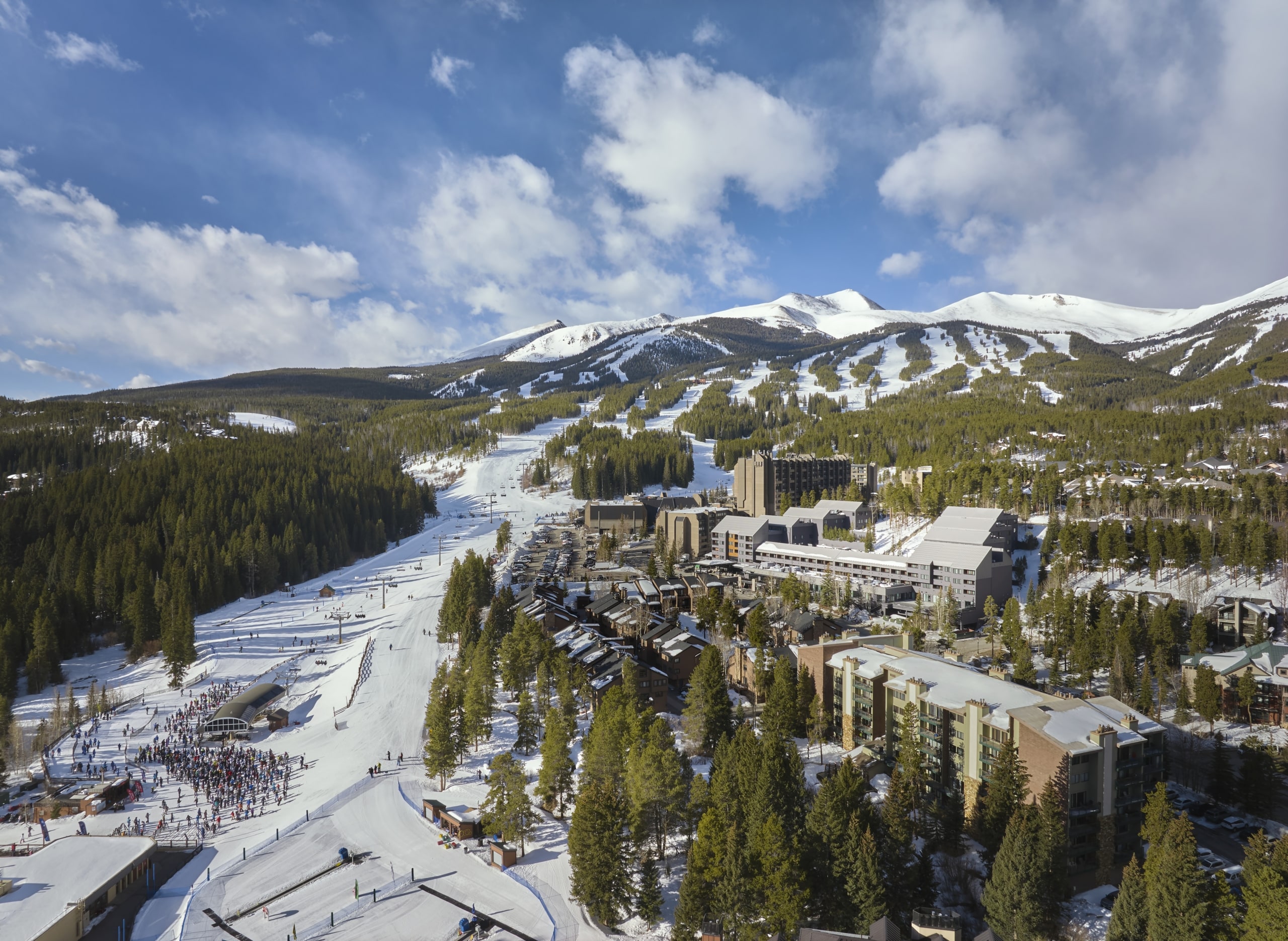
- Breckenridge and Copper Mountain sit only about 25 to 30 minutes apart in Summit County, so you can base in one town and ski both on a single trip.
- Breckenridge is the larger resort, with 2,908 skiable acres across five peaks and North America’s highest chairlift, plus a lively historic Main Street.
- Copper Mountain’s terrain divides naturally by skill level, making it a favorite for beginners, families, and terrain-park riders.
- Breckenridge runs on the Epic Pass and Copper runs on the Ikon Pass, so the pass in your pocket may make the choice for you.
- Copper usually feels less crowded, while Breckenridge wins on dining, après, and after-dark energy.
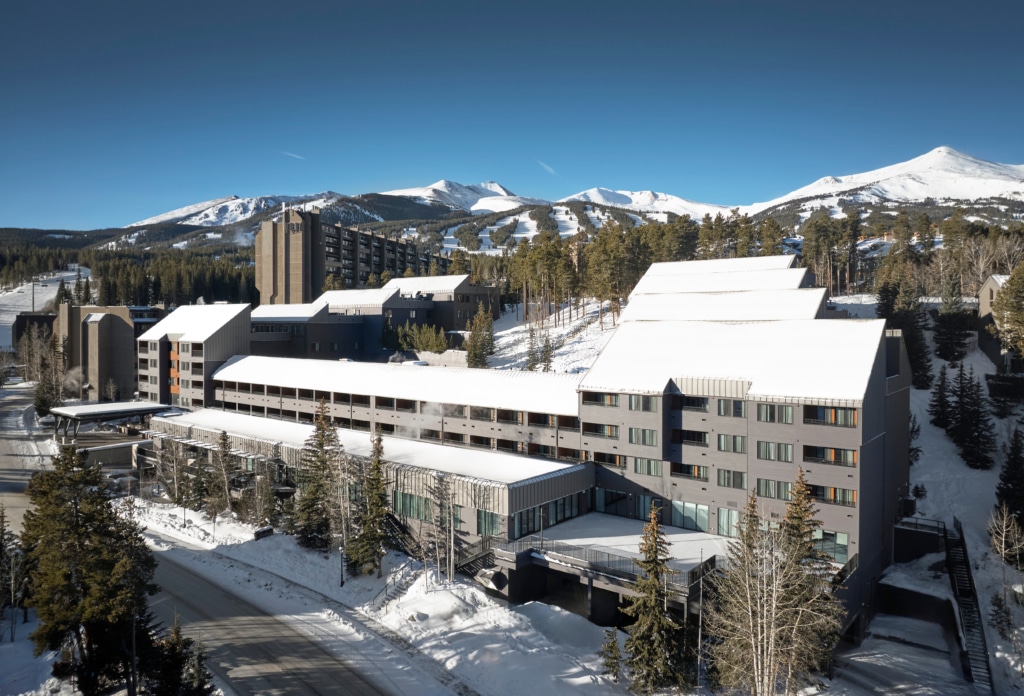
- Hotel Alpenrock is slopeside lodging at the base of Peak 9 — an easy Breckenridge basecamp for exploring both mountains.
Two of Colorado’s best ski resorts sit barely half an hour apart in Summit County, so the Breckenridge vs. Copper Mountain question comes down to the kind of trip you want. Choose Copper Mountain for a quieter, purpose-built village and terrain that sorts itself neatly by skill. Choose Breckenridge for a lively gold-rush town, five peaks of variety, and après that spills onto a historic Main Street.
These two mountains are neighbors, roughly 25 to 30 minutes apart via CO-9 and I-70, and both sit about two hours from Denver. That closeness is the secret: you don’t have to pick just one.
Base yourself at Hotel Alpenrock in Breckenridge, Colorado, slopeside lodging at the base of Peak 9, steps from the lift, and you’ve got an alpine basecamp for exploring both. Carve Breck’s peaks one day, venture to Copper the next, and come home to the same cozy room each night.
Ultimate Guide to Breckenridge
How Do Breckenridge and Copper Mountain Compare?
Breckenridge is the larger, livelier resort with five peaks and a historic town at its feet, while Copper is a compact, athlete-focused mountain with a quiet modern village. Breck wins on size, nightlife, and variety; Copper wins on smart natural layout and shorter lift lines.
Here’s the short version: if you want more terrain and a town that stays buzzing after the lifts close, Breckenridge is your pick. If you’re chasing a mellow home base and a mountain that funnels each skill level to its own zone, Copper delivers. Either way, your bed’s in Breck.
Prepare for Your Trip to Breckenridge
How Does the Terrain Compare?
Breckenridge spreads 2,908 skiable acres across five connected peaks, giving you groomers, glades, and high-alpine bowls in one sprawling network. Copper’s roughly 2,507 acres are cleverly organized so the mountain itself splits by difficulty, west to east.
Breckenridge’s Five Peaks
Breck’s terrain lives on Peaks 6 through 10, and that range is the whole appeal. You can warm up on wide groomers, then ascend the Imperial Express SuperChair, the highest chairlift in North America at 12,840 feet, to conquer above-treeline bowls.
- Peaks 9 and 10: Approachable cruisers plus steeper lines as you climb — a natural progression zone.
- Peaks 6, 7, and 8: Big-mountain bowls, chutes, and glades for skiers ready to push higher.
- Four O’Clock run: Ski straight toward town at day’s end and roll into Main Street.
Copper Mountain’s Naturally Divided Layout
Copper’s genius is its geography: the mountain sorts skiers by ability without a trail-map fight. Beginners stay west near Union Creek, intermediates settle in the middle, and experts head east to the steeps.
- Terrain split: 24% beginner, 26% intermediate, 32% advanced, 10% expert, 8% extreme.
- West side: Union Creek’s gentle pitches keep new skiers away from faster traffic.
- East side: Steep, rugged lines reward advanced skiers who want to earn their turns.
On snow, both mountains sit high and deliver classic dry Colorado powder. Copper averages around 280 inches of snowfall a year, and Breck’s lofty peaks pull in roughly 300 inches and hold conditions well into spring.
Which Mountain Is Better for Beginners and Families?
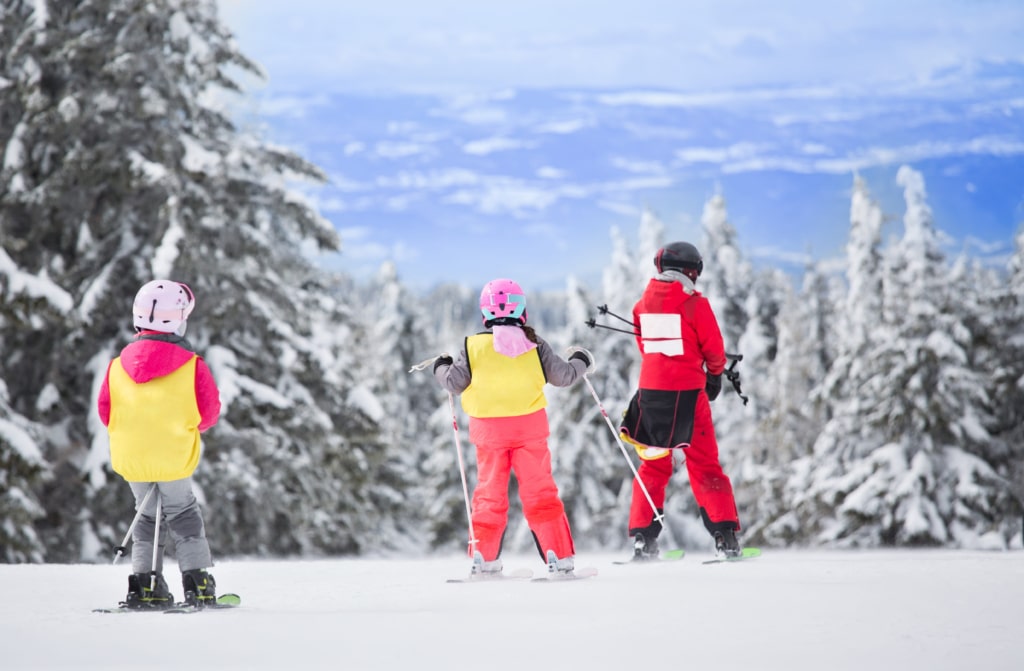
Copper Mountain has a slight edge for first-timers thanks to its west-side Union Creek area, where beginners learn far from advanced traffic. Breckenridge still shines for families, with dedicated green zones on Peaks 8 and 9 and a town full of off-mountain fun for every age.
If your crew is mostly brand-new to skiing, Copper’s separation keeps nervous beginners in their own protected pocket. That layout takes real pressure off a first day on the snow.
Breckenridge counters with variety that grows with your family. New skiers progress across Peaks 8 and 9, while stronger skiers roam higher — and the range of skiing and snowboarding in Breckenridge means nobody’s stuck waiting.
- Choose Copper if: Your group is mostly beginners who want calm, dedicated learning terrain.
- Choose Breckenridge if: You’ve got mixed abilities and want town amenities within easy reach.
Where Will You Find Fewer Crowds and Better Flow?
Copper Mountain generally feels quieter, with shorter lift lines and a village that empties out after dinner. Breck’s lift network consists of mostly high-speed chairlifts that help ease the lift lines.
Copper’s naturally divided layout does double duty here. By steering each ability level to its own side, the mountain keeps traffic from bottlenecking at the same runs.
Breck sees more visitors, but its sheer size gives you room to escape. Ascend to the higher bowls on a busy morning, and you’ll often find breathing space above the treeline.
Town or Resort Village — Which Vibe Suits You?
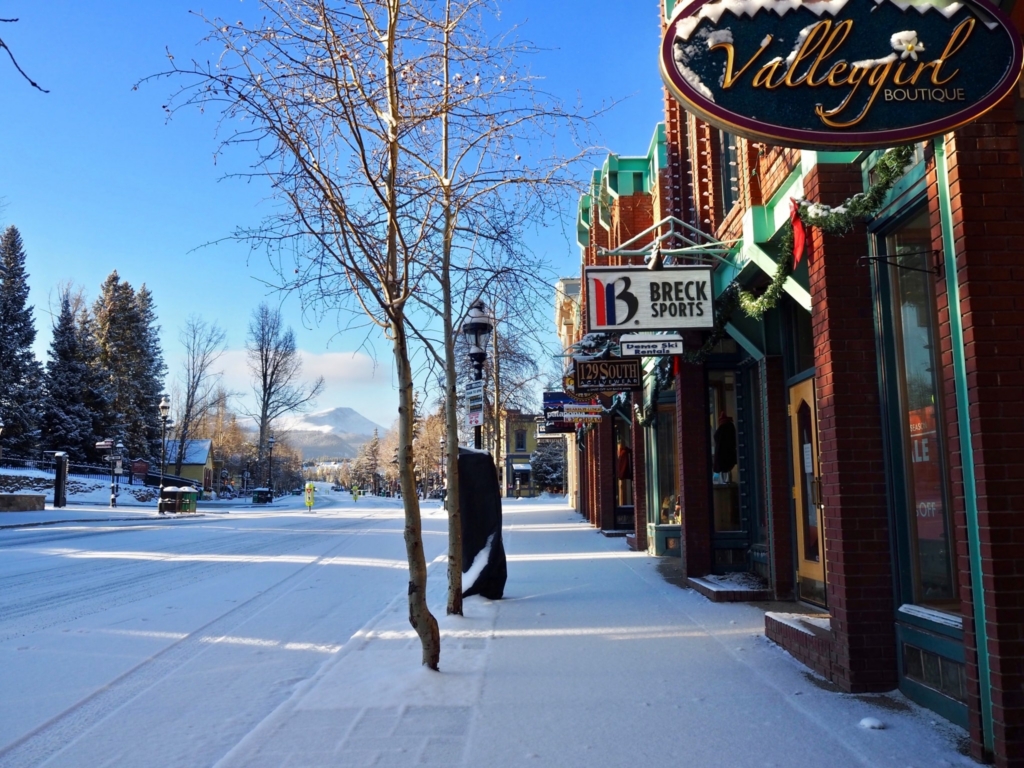
Breckenridge is a historic gold-rush town with a walkable Main Street packed with restaurants, bars, and shops, while Copper is a compact, purpose-built village that winds down early. If you love lively evenings and real local character, Breck’s town is the reason to base there.
Breck’s Main Street carries more than a century of mining history in its colorful storefronts. After a day on the snow, you can wander from dinner to après to a nightcap, all on foot.
Copper’s modern village is tidy and convenient for a mid-day break, but it’s noticeably quieter once the lifts stop. That same lively-town advantage shows up when you compare Breckenridge and Vail or weigh Breckenridge against Aspen.
- Breckenridge: Historic Main Street, wide-ranging dining, and lively après within walking distance.
- Copper: Streamlined village built for skiing, calmer after dark.
Epic vs Ikon — How Do the Passes and Prices Compare?
Breckenridge is on the Epic Pass (Vail Resorts) and Copper Mountain is on the Ikon Pass (POWDR), so your existing pass may make the choice for you. Single-day window tickets run roughly $100 to $255 depending on the resort and date, while season passes cost far less per day.
If you ski more than a few days a year, a pass almost always beats window pricing. Epic Local covers Breck through your Breckenridge lift tickets and ski passes, and Ikon Base covers Copper.
- Already have Epic? Breckenridge is your home mountain.
- Already have Ikon? Copper is included.
- Buying single-day tickets? Expect roughly $100–$255 per day, and book early to dodge peak-date rates.
Book lift access in advance either way. Window rates climb on the busiest dates, so planning ahead protects your budget.
How Far Apart Are They? Can You Ski Both?
Yes — Breckenridge and Copper Mountain sit only about 25 to 30 minutes apart via CO-9 and I-70, so skiing both in one trip is easy. Basing in Breckenridge puts you within quick reach of each mountain without changing hotels.
The free, county-wide Summit Stage bus connects Breckenridge, Frisco, Copper, Dillon, and Silverthorne. That means you can leave the car parked and still hop between resorts.
Both mountains sit roughly 75 to 90 minutes from Denver, so a two-resort week doesn’t add real travel strain. A little groundwork goes a long way, and planning your Breckenridge ski trip ahead of time keeps both mountains on the table.

Which Should You Choose?
Choose Breckenridge if you want more terrain, high-alpine bowls, and a historic true mountain town that stays lively after dark; choose Copper if you prize a quiet village and a mountain that sorts itself by skill. For most travelers who want variety on the snow and life in town, Breckenridge is the stronger home base — and you can still ski Copper anytime.
Weighing other Summit County and Colorado resorts too? See how the same case plays out in Breckenridge vs Keystone and Breckenridge vs Park City.
Picture the day from your basecamp. You wake at Hotel Alpenrock in Breckenridge, Colorado, slopeside lodging at the base of Peak 9, and you’re on the lift steps from the hotel before the crowds.
Spend the morning carving Breck’s peaks or venture to Copper for a change of pace. Then come home to unwind in the courtyard’s outdoor hot tubs, gather for a family-style Colorado-meets-Italian dinner at Edwin, and settle in for a craft cocktail at The Carter.
Whichever mountain you explore, you’ll do it from one warm, easy home in the heart of Breck. Alpine adventures await — Book Your Stay.
Frequently Asked Questions
Breckenridge edges it out, averaging about 300 inches a year to Copper’s roughly 280. Both deliver that high, dry Colorado powder you came for. Copper’s higher-alpine east side tends to hold late-season snow a little longer, so spring riders often drift that way.
Often, yes. Copper frequently offers better single-day and lodging value, while Breck rides the Epic Pass and Copper runs on Ikon. If you want to stretch your budget and ski both, base yourself in Breckenridge and explore from there. Our slopeside lodging at the base of Peak 9 keeps you close to the lift and central to both mountains.
It’s the altitude. Breckenridge’s base sits around 9,600 feet, and your body needs a night to adjust. Hydrate well, ease into your first day, and go easy on the alcohol. Rest up and you’ll be ready to conquer the mountain by morning.
About 25 to 30 minutes via CO-9 and I-70. It’s an easy hop, which makes chasing two mountains in one trip totally doable. Prefer to skip the drive? The free Summit Stage bus connects the area, so you can leave the car parked and enjoy the ride.
It depends on how you ride. In the Breckenridge vs Copper Mountain debate, Copper’s Woodward parks are a huge draw for park riders, while Breck brings serious terrain-park pedigree across varied peaks. One heads-up: Copper has a few flat traverses that can trip up boarders, so plan your lines with some speed.